
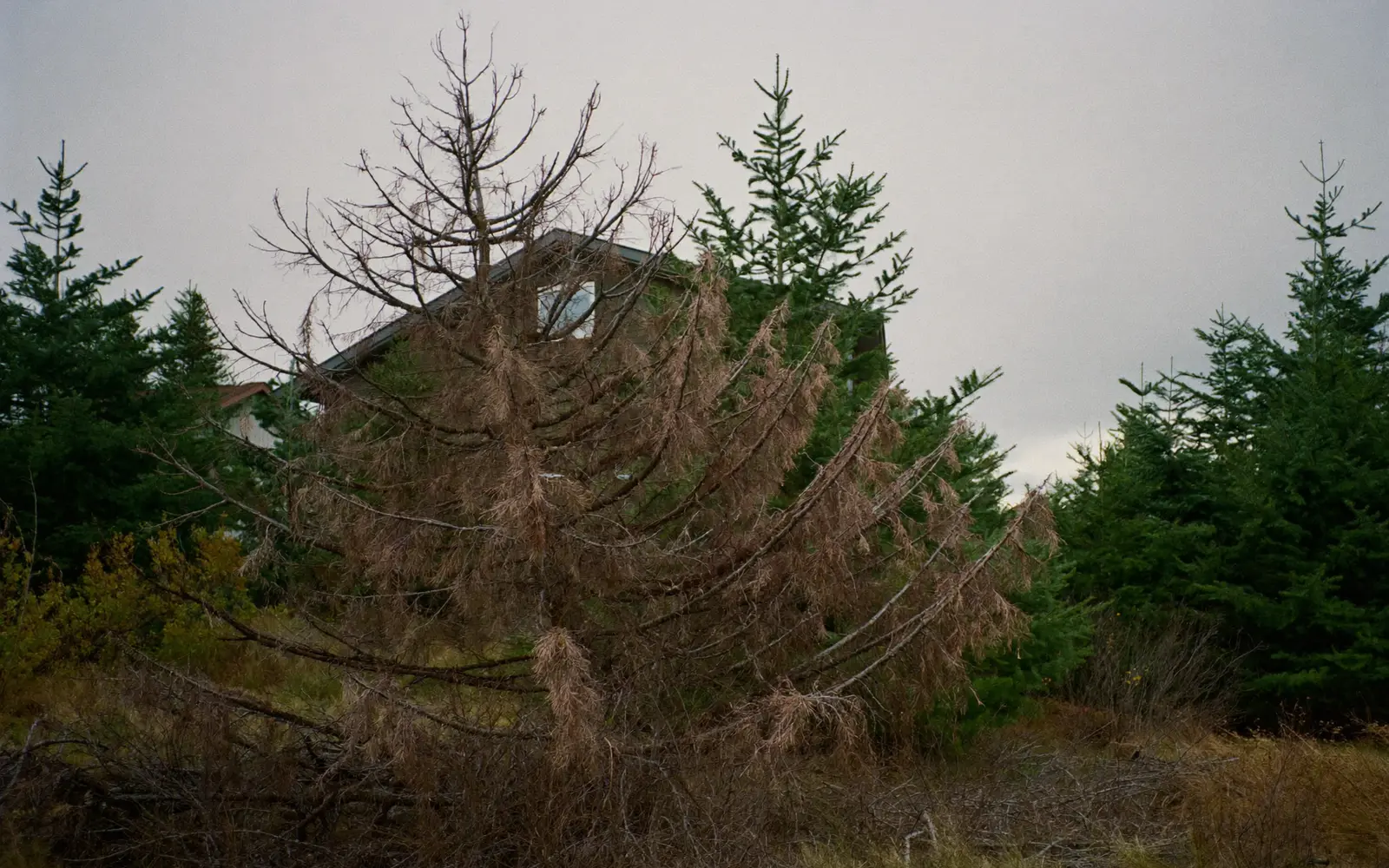
A tree rarely dies overnight. In Kirkland the usual story is a Douglas fir thinning from the bottom up for a few years, or a western redcedar whose top went brown after a hot August. Kirkland Sentinel Tree Care diagnoses what is killing the tree, whether it can be saved, and removes it before it becomes an emergency.
What kills trees here
| Cause | Trees | Signs |
|---|---|---|
| Laminated root rot | Douglas fir, grand fir, hemlock | Thinning, yellowing crown; short new growth; trees falling over with a small, rotted root ball; often in groups |
| Armillaria root disease | Many conifers and broadleaf trees | White fungal sheets under bark at the base; honey mushrooms in fall |
| Cedar dieback | Western redcedar | Dead or thin top after drought years; sparse foliage |
| Bark beetles | Stressed Douglas fir | Reddish boring dust, pitch tubes, a crown that turns red in months |
| Construction damage | Any | Decline 2–5 years after trenching, paving or grade change near the roots |
| Old age / decay | Alder, cottonwood, birch | Conks, cavities, dead limbs high in the crown |
Dead, dying or just stressed?
- Dead: no green foliage, bark loosening, twigs snap dry. Remove.
- Dying: less than half the crown alive, active root disease, or beetles in a fir. Usually remove.
- Stressed: thin foliage after drought, some dieback, no active disease. Often recovers with mulch, deep summer watering and pruning out deadwood.
Paperwork for dead trees
A dead regulated tree is still a regulated tree. If it’s within your yearly allowance and no special conditions apply, the free notification covers it. Over the allowance, or in a buffer, shoreline or covenant area, it goes through the permit as a hazard tree, and a dead tree near a target is usually the easiest hazard case to make. Get an arborist to document it.
Removing dead wood safely
Dead trees can’t always be climbed. Dry, rotting wood doesn’t hold rigging well and tops can break unexpectedly. That’s where a bucket truck or crane earns its cost: the climber stays off the tree.
Root rot and the trees nearby
Laminated root rot spreads through root contact, so one dead fir often means the next one along has it too. When we remove an infected tree, we look at neighbours within about 50 feet and say which to watch. Stumps of infected firs can be ground, but the fungus survives in the roots left behind.
Tree turning brown? Get it looked at before the wind does it for you.
(425) 000-0000Common questions
What happens if you don't remove a dead tree?
Dead trees dry out, rot and lose limbs, then fail at the base or trunk, usually in a winter storm. The wood also gets brittle, which makes it more dangerous and more expensive to climb and remove the longer you wait.
Is my cedar dying if the top is brown?
Possibly. Western redcedars across Puget Sound have been dying back from the top after hot, dry summers. Some recover partially; a fully dead top over a house should be removed or reduced. An arborist can tell dieback from normal fall needle drop, which also browns inner foliage.
Can I replant a fir where one died of root rot?
Not another Douglas fir. Laminated root rot survives for decades in old roots and spreads root to root. Western redcedar, broadleaf trees and many ornamentals are more tolerant replacements.