
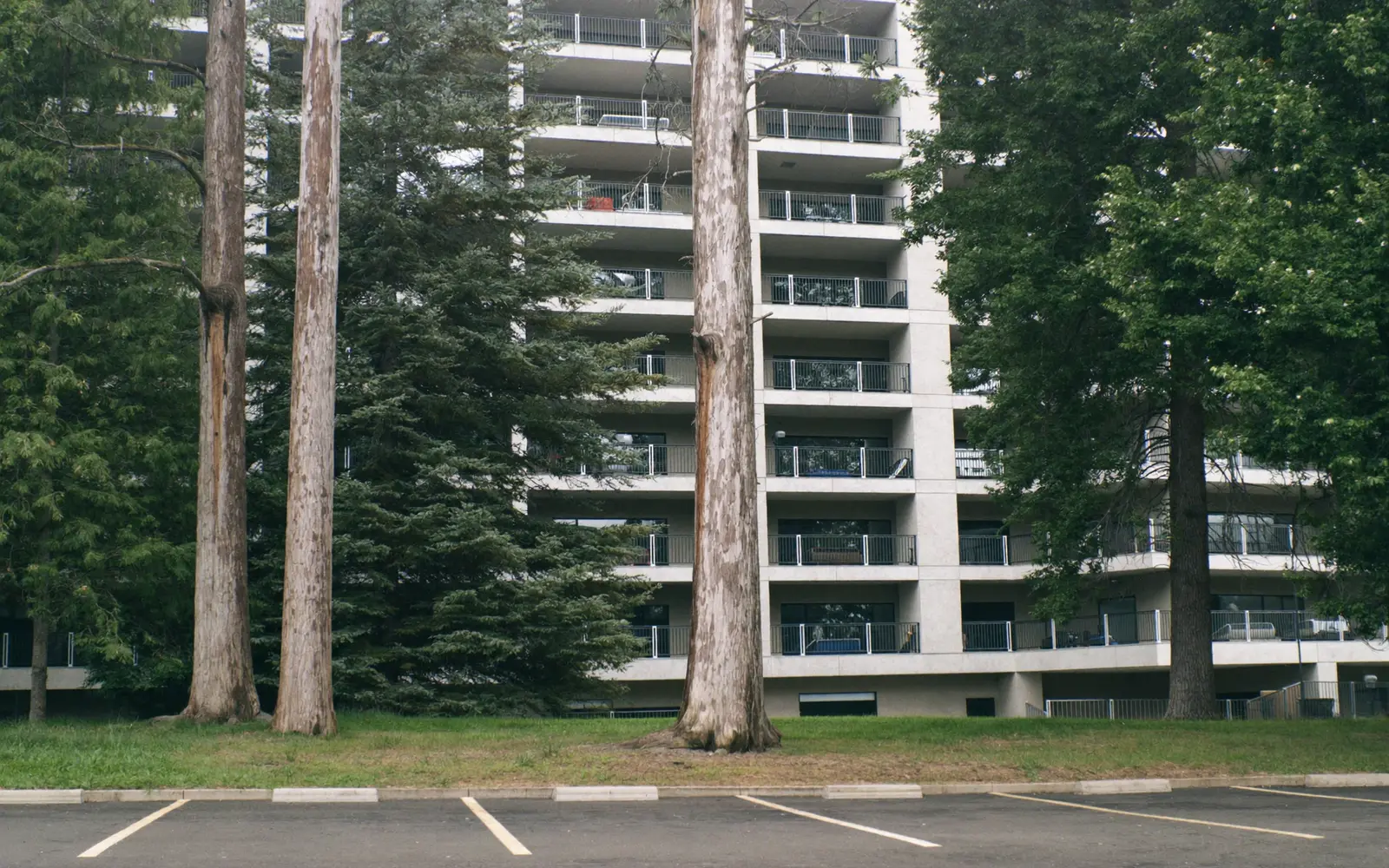
Condo associations, HOAs, apartment owners and office parks in Kirkland manage trees under different rules from a single-family homeowner. Kirkland Sentinel Tree Care helps boards and property managers plan tree work across several years, budget for it, and keep it inside the city’s rules.
Why your trees are treated differently
The free Tree Removal Notification can’t be used when trees were retained or planted as required landscaping, typical for multifamily, mixed-use and commercial developments, or when they sit in a Grove Covenant, Tree Preservation Covenant or Native Growth Protection Easement. Most removals then need a permit, and the tree must be a hazard or nuisance, with an arborist report and a replanting plan.
What a tree plan for a property covers
| Item | Why |
|---|---|
| Inventory of significant trees | Know what you have: species, size, condition, location |
| Risk priorities | Big trees over parking, paths, play areas and buildings first |
| Pruning cycle | Spread costs: a section of the property each year |
| Removals with permits | Bundle hazard removals into one permit cycle where possible |
| Replanting | Meet landscaping requirements and keep the property’s look |
| Storm response | Who to call at night, what the board pre-approves |
Common jobs
- Crown cleaning and thinning on big Douglas firs over parking lots
- Clearance pruning over roofs, walkways and fire lanes
- Hazard assessments before storm season
- Removing trees lifting sidewalks or damaging side sewers (nuisance), with documentation
- Storm cleanup across a whole property after a windstorm
Working with boards
We give written scopes per area, photos before and after, and a calendar the board can approve once a year. For Totem Lake and other multifamily areas, see Totem Lake.
Managing trees for an HOA or property? Ask for a walk-through and a multi-year plan.
(425) 000-0000Common questions
Can our HOA use the free Kirkland tree removal notification?
Not for trees that were retained or planted as required landscaping, which is typical for multifamily, condo and commercial developments, or for trees under a Grove Covenant, Tree Preservation Covenant or Native Growth Protection Easement. Those removals go through the permit process.
Who is responsible for trees in HOA common areas?
The association, as the owner of the common area, under its CC&Rs. Trees in a recorded NGPE or tract may also carry restrictions written into the plat. Check the plat and CC&Rs before planning work.
How often should an HOA have its trees inspected?
A full walk-through every one to two years, plus a check after major storms. Big conifers over play areas, parking and paths deserve the most attention.